What STEM Education Actually Gives You
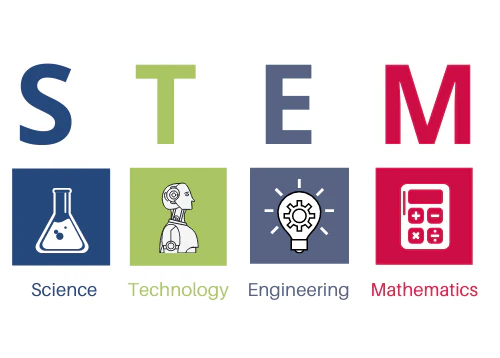
Ask most people why STEM education matters and you'll hear the same answer: jobs. That answer isn't wrong. Careers in science, technology, engineering, and math are among the fastest-growing and best-paid in the world. But it sells STEM short. The job is the most visible benefit, not the most important one. The deeper value of a STEM education is what it does to the way you think, and that follows you into every part of your life whether or not you ever write a line of code professionally.
It teaches you how to think
The most valuable thing STEM builds is a way of approaching problems. You learn to break a big, intimidating question into smaller pieces you can actually tackle. You learn to test an idea instead of just believing it. You learn to look at a claim and ask how you would know if it were true.
That habit doesn't stay inside a classroom. It shows up when you're comparing two apartments, reading a news headline, budgeting for something you want, or deciding whether an ad is being honest with you. STEM trains a clear, evidence-based way of reasoning that makes people better at almost every decision they face.
It makes failure survivable
Schools rarely say this out loud, but STEM is one of the few subjects where being wrong is built into the process. Your code doesn't run. Your experiment flops. Your bridge design collapses in the simulation. And then you fix it.
Over time this changes how a person relates to failure. Instead of treating a mistake as a verdict on your ability, you start treating it as information about what to try next. That resilience might be the most transferable skill STEM offers. People who have spent years debugging their own work tend to be calmer and more persistent when life hands them something that doesn't work the first time.
It opens doors that stay open
The career benefit is real, and it's worth being honest about. STEM skills are in demand across nearly every industry, they tend to pay well, and they travel. Someone who understands data, logic, or how systems work can move between fields in a way that's harder in more narrow professions.
But the opportunity isn't only about salaries. STEM literacy gives people options. It's the difference between using technology and being able to shape it. In a world increasingly run by software, automation, and data, understanding how those things work is becoming a basic form of self-determination.
It's how real problems get solved
Zoom out from the individual and the benefits get bigger. Nearly every challenge that matters to society runs through STEM, from clean energy and disease to food supply and accessible medicine. The people who move those problems forward aren't only the famous researchers. They're the engineers, technicians, analysts, and builders who learned somewhere along the way that they were capable of contributing.
That's the promise of STEM education. It doesn't just prepare people for the future, it hands them the tools to improve it. A student who learns to build something today is a person who might fix something that matters tomorrow.
It belongs to more people than we assume
One of the most underrated benefits is how open STEM has become. The tools are mostly free. The tutorials are everywhere. You no longer need an expensive lab or a special background to start learning. You need curiosity and a willingness to be confused for a while.
That accessibility makes STEM education one of the best equalizers we have. It rewards effort and persistence more than pedigree. A curious student in an ordinary town, with an ordinary laptop, can learn the same skills that power the world's biggest companies. That wasn't true a generation ago, and it changes who gets to take part.
The real takeaway
STEM education is worth it for the careers. But its deepest benefits are quieter and last longer: sharper thinking, a healthier relationship with failure, more control over your own future, and the ability to work on problems bigger than yourself.
You don't have to become a scientist to gain those things. You just have to start, and the benefits begin the moment you do.